Court decisions sit alongside administrative actions, attributed investigations and context. Each file tells you which is which—and what remains unresolved.
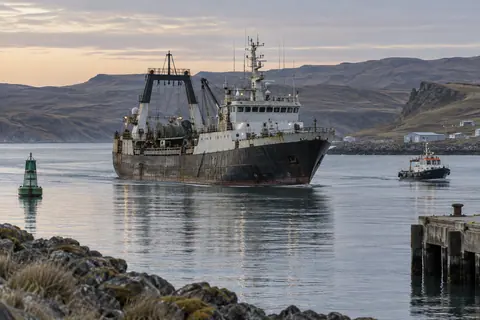
The National Court’s 18 July 2019 decision ordered forfeiture of Fu Yuan Yu Leng 999, identified Hong Long as its owner, and confirmed compensation of approximately US$6.14 million.
Argentina’s Prefectura describes Hua Li 8 fishing illegally in 2016, resisting inspection and later being detained in Indonesia following international cooperation. The record distinguishes a federal judicial order from an INTERPOL Purple Notice; a Purple Notice is not itself an arrest warrant.
Treasury’s 9 December 2022 action identifies Pingtan Marine Enterprise, Fuzhou Honglong and Xinrong Zhuo, with described corporate and operational relationships. A current public SDN-list check on 8 September 2026 found these three entries and the entries for Dalian Ocean Fishing and Li Zhenyu still present.
ITF also reports at least 27 crew disembarkations for medical attention in Peru during 2024. Its records provide a starting point for vessel-specific follow-up, not a diagnosis of trafficking in each instance.
PRODUCE’s October 2024 explanation of Decreto Supremo 014-2024-PRODUCE describes strengthened controls over foreign fishing vessels and satellite-monitoring arrangements. EJF subsequently reports a shift in port use toward Chile.
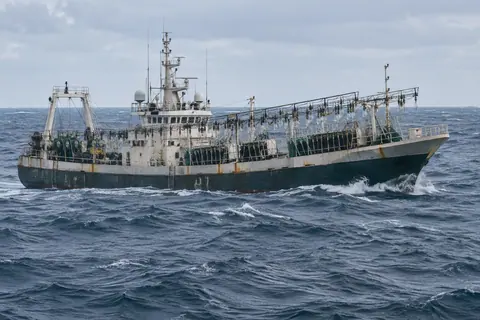
The Outlaw Ocean Project’s August 2024 investigation identified at least 62 Chinese-controlled industrial fishing vessels flying Argentina’s flag. That figure is not a count of 62 convicted vessels, nor exclusively a count of squid boats. The investigation explicitly describes lawful forms of “flagging in.”
C4ADS links Wei Fong carriers and Zhoushan Ningtai operations while explicitly noting lawful, authorized carrier activity. It also examines floating medical and logistics support.
The Outlaw Ocean Project’s vessel record associates Wei Yu 18 with Weihai Huanhai Aquatic and reports deaths and forced-labor allegations. The record identifies IMO 8782587, helping distinguish the ship from similarly named vessels.
A Federal Register notice effective 12 June 2024 added Shandong Meijia Group, also known as Rizhao Meijia Group, to the UFLPA Entity List. The relevant government determination concerns labor-transfer practices.
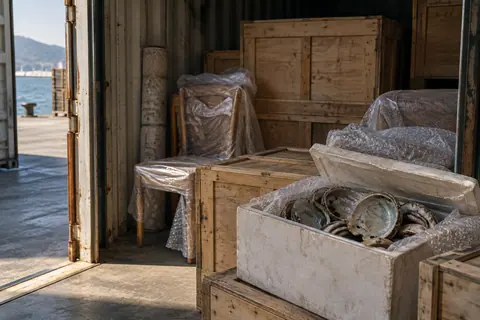
A furniture business concealed a marine-wildlife trade route from Mexico through the United States to China. DOJ records establish guilty pleas and a later sentencing—not just an accusation.
The tribunal found violations involving Philippine resource rights, interference with traditional fishing access at Scarborough Shoal, harmful wildlife harvesting and severe coral-reef damage. The official summary also explains that it did not decide sovereignty over land territory. China rejected the arbitration and award.
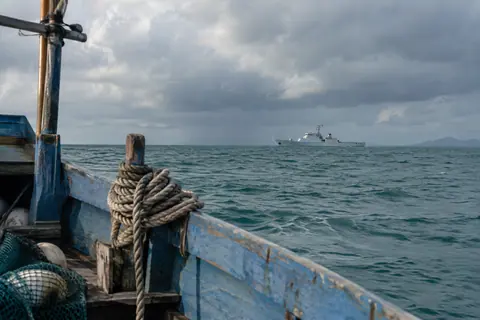
Indonesian officials stated that a Chinese coast-guard vessel interfered with enforcement against Kway Fey 10078 near Natuna. China’s foreign ministry advanced a different account, referring to traditional fishing grounds and assistance to the vessel.
The applicable framework is not a legal vacuum. SPRFMO’s published 2026 measures include squid-vessel limits and monitoring requirements. Its transshipment measure establishes rules for transfers, while the organization also has a labor-standards decision.
C4ADS describes changes of flag among heavily used carriers and reports an ownership dispute involving Winson and certain ships. Winson denied the attributed ownership or control. That dispute must remain visible, not be converted into an undisputed network edge.
An Argentine government announcement of 8 March 2018 says a federal judge ordered the international capture of Jing Yuan 626 and four other Chinese-flagged vessels.
China’s own agriculture ministry identified transfers to carriers not registered with SPRFMO and ordered the removal of annual fuel subsidies for four fishing vessels.
An investigation followed sick crew members through South American waters. In May 2025, U.S. Customs ordered detention of seafood harvested by the vessel on forced-labor grounds.
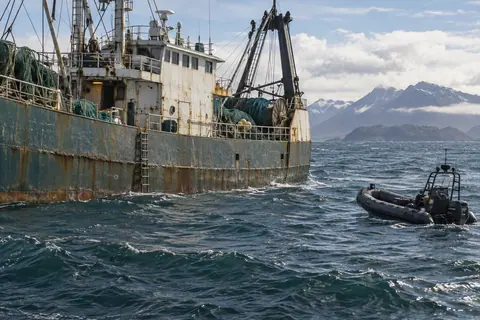
The fishing vessel escaped the initial boarding attempt, then returned to Argentine jurisdiction after contact with its operator and Chinese authorities.
Administrative sanction and paymentRead the file →
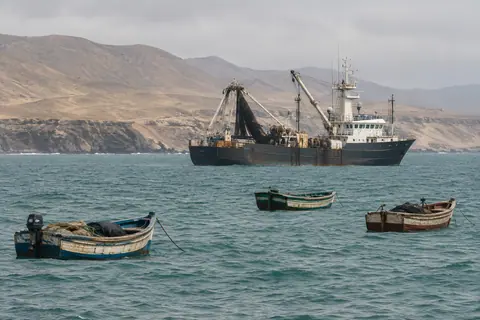
Peruvian authorities seized squid and later sought a criminal sentence for the captain. The distinction between that request and an actual verdict is central to the record.
Seizure; prosecution referred to trialRead the file →
The record reaches beyond an excessive catch allegation: fisheries scientists found discrepancies in gear reporting, while prosecutors reported labels that did not match inspected contents.
Scientific findings; criminal investigationRead the file →
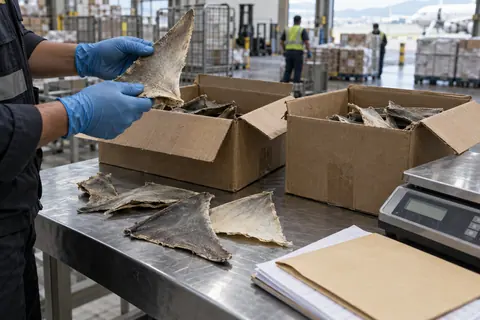
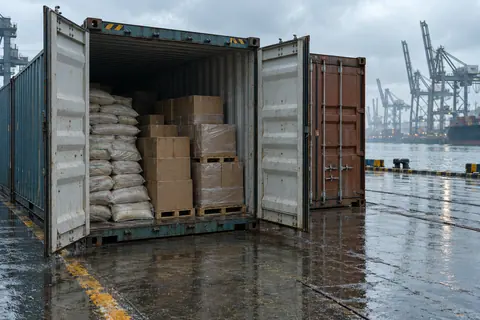
A postal route linked Peru’s southern coast to a planned Hong Kong export. Prosecutors reported a five-year prison sentence after identifying protected shark products.
Hong Kong Customs intercepted two Ecuador-origin shipments. The record establishes the trade route and seizures—not which fishing boats supplied the fins.
Customs seizures; outcome unresolvedRead the file →
C26 / Mexico / Gulf of California → United States↗
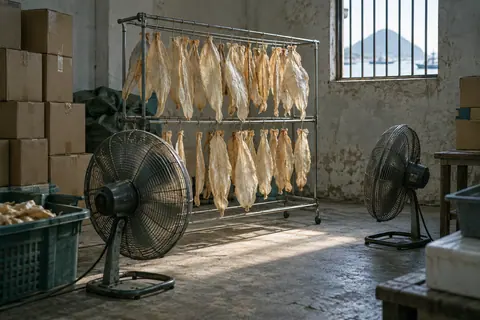
A border inspection led investigators to a Calexico house used to dry endangered fish products. The sentencing record reveals processing and consolidation beyond the initial smuggling trip.
Federal sentencingRead the file →
C27 / Indonesia / recruitment and the Malacca Strait↗
Two Indonesian men reportedly escaped Lu Qing Yuan Yu 901 after alleged abuse. Police inquiries extended ashore to recruiters and purported seafarer certificates.
Survivor accounts; police investigationRead the file →
Global Fishing Watch traced Yong Xing 1 through changes in transmitted identifiers associated with China, South Korea and Argentina. That is not the same as three verified national registrations.
Tracking-based identity analysisRead the file →
C29 / Southeast Pacific / SPRFMO; decision in Manta, Ecuador↗
SPRFMO records explicitly connect two refused U.S. boardings to Chinese government instructions. They also record the decision not to put the vessels on the final IUU list.
Documented state instruction; disputed complianceRead the file →
C30 / Peru / Panama / China; cross-ocean ownership history↗
A processing mother ship linked historically to the Pacific Andes group became an IUU-list and port-access case. Its subsequent sale and removal from the list are essential parts of the history.
Historical IUU listing; delisted in 2020Read the file →
C31 / United States / Virginia; imports from Asia and the Americas↗
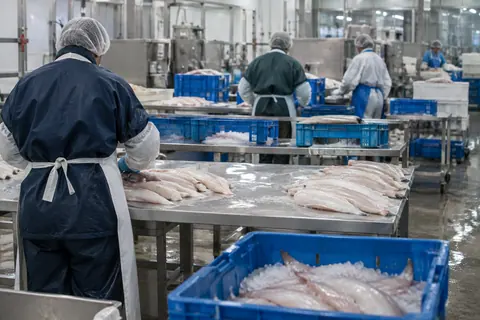
A U.S. seafood processor blended and repacked imported crab under a domestic-origin label. China was among several source countries—not the location of the proven labeling offense.
Federal conviction and sentencingRead the file →
No files match those filters. Try a broader term or reset the filters.