Mexico / Gulf of California → United States
The drying house behind a totoaba border seizure
A border inspection led investigators to a Calexico house used to dry endangered fish products. The sentencing record reveals processing and consolidation beyond the initial smuggling trip.
Federal sentencingApril 2013 discovery; August 2014 sentence · Reviewed September 8, 2026
On this page
What the record establishes
In August 2014, DOJ reported a one-year prison sentence for Song Shen Zhen and US$120,500 in restitution ordered to Mexico’s environmental protection agency. The case concerned endangered totoaba swim bladders smuggled from Mexico.55
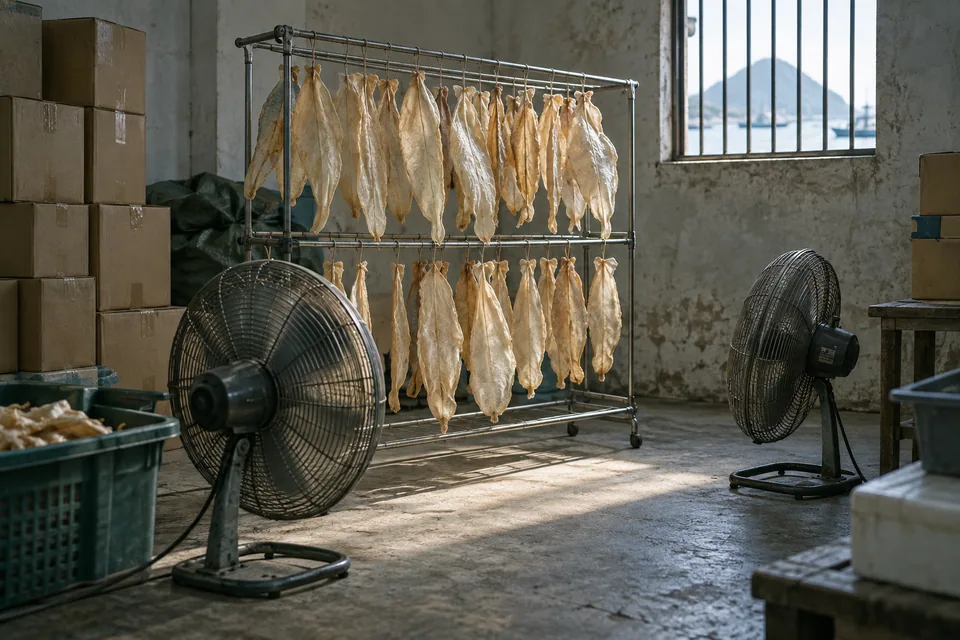
The sentencing account separates 27 bladders discovered in a vehicle from 214 later found at a sparsely furnished house. Fans, drying rows and packing materials indicated preparation for further distribution. Evidence pointed to overseas shipping, but the release does not identify the final foreign buyer.55
The earlier charging release placed the trade in the context of demand for fish maw in Chinese markets. NOAA separately describes the threat totoaba gillnets pose to vaquita in the Gulf of California. That ecological relationship is not proof that this particular shipment caused a vaquita death.5657
Why it matters
This is a processing and distribution vignette, not simply an illegal-catch story. A modest house and ordinary packing equipment can connect a poached marine species to international commerce. The record also shows why cargo quantity, route and actual sentence should replace speculative black-market valuations in an accountability account.
The sequence
Border search and surveillance
The later sentencing record dates the vehicle discovery and ensuing house search to this day.55
Wider trade investigation announced
DOJ describes several separate totoaba cases and the overseas market.56
Sentence and restitution announced
DOJ reports the prison term and payment order.55
Responses and legal posture
DOJ’s sentencing account is the primary outcome source. It supersedes inconsistent details in the initial charging announcement. A separately published defense response was not located.5556
What remains unresolved
Restitution was ordered; actual receipt was not verified. No Chinese state role, named overseas customer or particular fishing vessel is established. The verified route is Mexico to the United States, with evidence consistent with onward overseas distribution. The defendant’s nationality is not inferred from his name.
The Chinese connection is the market context identified by DOJ, not proven direction or participation by the Chinese government. The convicted conduct in this file took place in the Mexico–U.S. supply chain.
How to read the evidence labels →Sources for this file
Fishy Business: smuggler of swim bladders sentenced in federal court ↗
Song Shen Zhen: sentence, restitution, border discovery and drying house
Source limits
27 bladders found at the border and 214 at the house, not 241 in the car. Restitution ordered does not establish payment; overseas buyer unidentified.
Massive trade in endangered species uncovered: totoaba cases ↗
Zhen search and Chinese-market context
Source limits
Other defendants’ charges are not their convictions. Some chronology and seizure detail differ from the later sentencing account; S55 controls for Zhen.
Vaquita: species and threats ↗
Totoaba gillnet bycatch and Gulf of California habitat
Source limits
Species-level ecological context does not prove a specific trafficker caused an individual vaquita death.