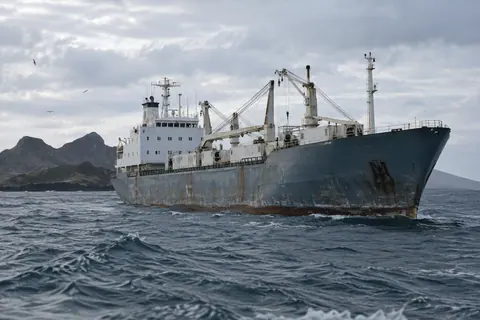
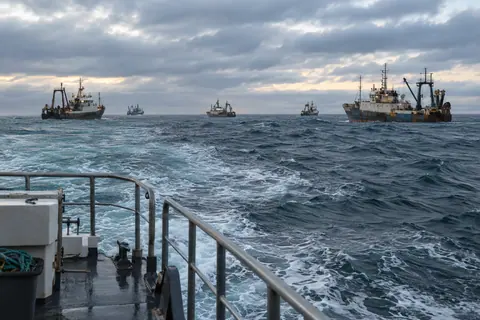
C03 / Pacific / Indonesia
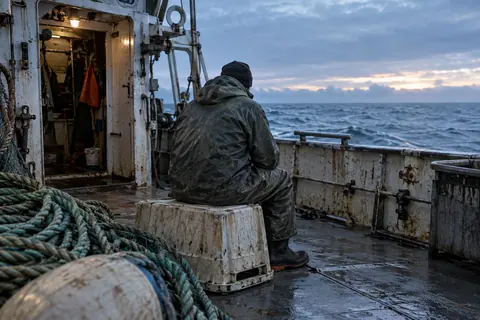
The debt and abuse that followed a crew to sea
Sanctions & labor findingsRead the file
Follow the sequence
Five stages for understanding a network. They are investigative questions—not an assertion that every operation or relationship is unlawful.
01 / Recruit the crew
Contracts, recruitment debt, document retention, threats and freedom to leave must be read together. The forced-labor question involves involuntariness and menace of a penalty, not simply whether work is unpleasant or dangerous.2910
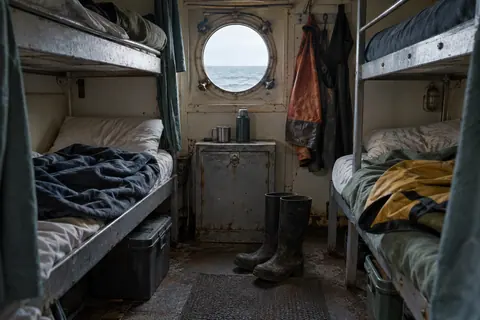
02 / Identify who controls the vessel
A flag, a registered owner, an operator and a beneficial owner are different things. Ordinary flag changes can be lawful. Fraudulent registration requires evidence of false or unauthorized registration; an AIS identity problem is a separate issue.2536
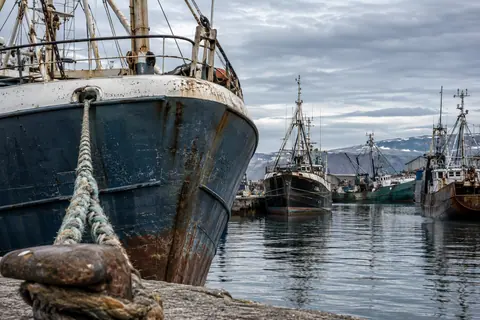
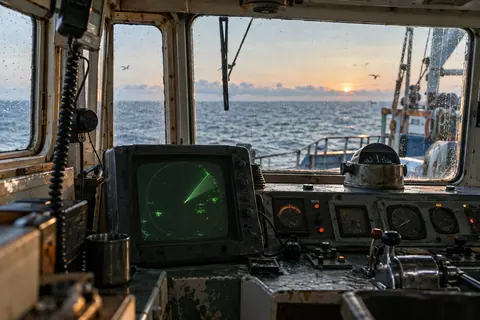
03 / Follow the offshore support
Carriers, fuel and port services can keep an operation functioning. An AIS encounter does not prove a cargo transfer; a transfer does not automatically establish illegality. One documented case concerns recipients missing the required SPRFMO registration.052836
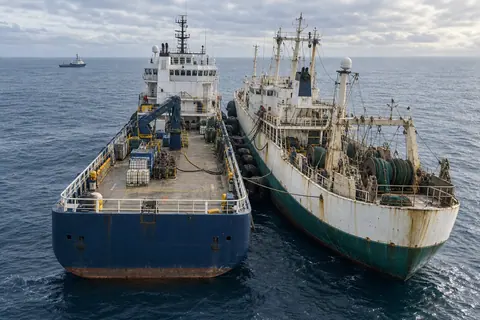
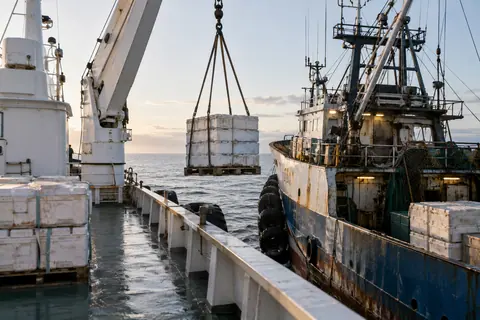
04 / Follow the product and the money
Harvest origin, processing country and final market must remain separate. The U.S. processing-list case concerns labor practices. The Kaven criminal case concerns a documented wildlife-smuggling route. A financing relationship requires its own evidence and does not establish lender complicity.163537

05 / Follow the outcome
An investigation, capture order, guilty plea, sanction and final judgment are different events. Outcomes can also change on appeal. A record should follow compensation, corrective action and current restrictions, without treating an order as proof that it was carried out.023435